Training for Pre‑School Teachers Strengthens Early Learning

A coordinated training program for pre‑school educators is underway across several regions, focused on improving classroom practice and early literacy. Facilitators emphasized a child‑centered approach, practical lesson planning, and community involvement.

Participants reported gaining confidence in using locally available materials for play‑based learning, and in creating inclusive classrooms where all learners can participate. Schools will also receive a simple starter kit to support reading corners and activity stations.

The next phase will focus on classroom observation and peer mentoring so teachers can continue to improve after the workshop. Families and local groups were invited to closing sessions to reinforce foundational skills at home through reading circles and weekend activities.

“Early learning is a community investment—when families and educators work together, every child benefits.”

1,700+ educators completed practical training

Emphasis on play‑based, inclusive classrooms

Peer mentoring planned for the next phase

Families engaged via reading circles
Next Post

Share:

More Posts

Ethiopia’s Claims to the Red Sea

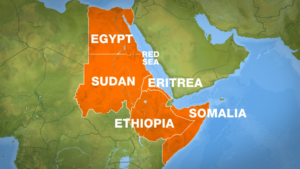
During a recent interview in September, Prime Minister Abiy Ahmed stated that the Red Sea belonged to Ethiopia 30 years and ago, and that it would be theirs again. Prime Minister Abiy goes on to imply that due to Ethiopia’s size and internal needs, full control of the sea must be retained. The underlying implications of these statements are particularly important as they falsify history and undermine Eritrea’s rights of ownership to its borders and ports.

Eritrea and the Architecture of Post-War Order

Recently, The Economist published an article called “Africa’s most secretive dictatorship faces an existential crisis.” In this article, the author, Economist correspondent Tom Gardner, pins any and all issues Eritrea faces on its leader, Isaias Afewerki, and his personal vendettas with Ethiopian leadership. The problem with this argument, however, is that it is selectively historical – it picks and chooses which historical events to include to frame Eritrea’s current predicament; Gardner fails to situate Eritrea’s position in the geopolitical milieu that have produced its diplomatic issues. Below, I outline the necessary historical information to truly understand the problems that plague the Horn of Africa and threaten national Eritrean sovereignty, specifically.

Eritrea’s Foreign Policy Moves and U.S. Diplomatic Efforts

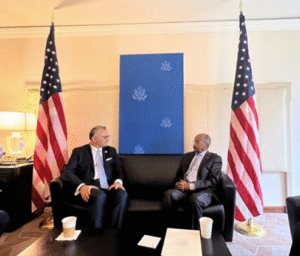
On September 26, 2025, Eritrea’s Foreign Minister Osman Saleh participated in the 80th United Nations General Assembly in New York, where he held talks with Massad Fares Boulos, Senior Advisor to President Trump on African Affairs, to discuss strengthening U.S.–Eritrea relations and potential collaboration on regional peace and security initiatives.

Africa Diaspora Day on the Hill

Policymakers, diplomats, and leaders from across the African continent and its diaspora gathered at the U.S. Capitol for the second annual Africa Diaspora Day on the Hill, a day-long forum aimed at strengthening ties between African communities and U.S. institutions. The event, held in the Congressional Auditorium, convened more than 150 participants for dialogue on investment, innovation, and the shared responsibility of advancing Africa’s future.

Scroll to Top