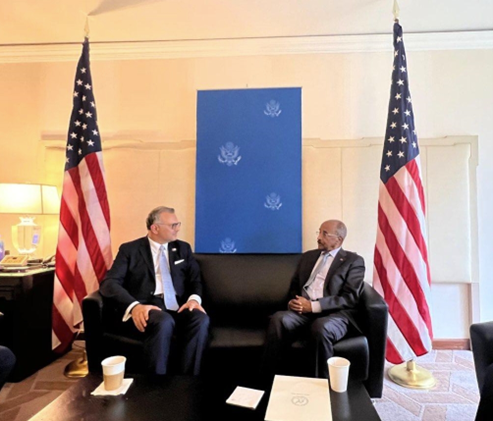
On September 26, 2025, Eritrea’s Foreign Minister Osman Saleh participated in the 80th United Nations General Assembly in New York, where he held talks with Massad Fares Boulos, Senior Advisor to President Trump on African Affairs, to discuss strengthening U.S.–Eritrea relations and potential collaboration on regional peace and security initiatives.
Minister Osman highlighted Eritrea’s commitment to constructive dialogue grounded in respect for national sovereignty, emphasizing shared interests in the Horn of Africa, the Nile Basin, and the Red Sea. He also reaffirmed Eritrea’s dedication to sustainable regional development and welcomed prospects for closer collaboration with the United States.
Mr. Boulos underscored the U.S. interest in fostering dialogue and understanding in a region vital to international trade, security, and counterterrorism. He noted that this engagement could open a new chapter in U.S.–Eritrea relations, creating potential opportunities in trade, investment, infrastructure, communications, and security, while constructively addressing longstanding concerns. Both sides agreed to continue exchanges in the coming months to revitalize bilateral relations.
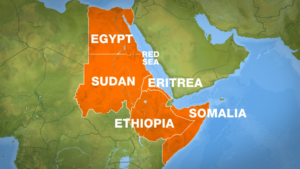
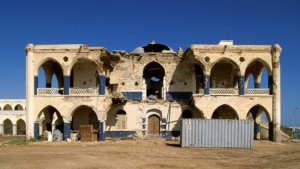
Tensions between Eritrea and Ethiopia have risen over Ethiopia’s push for “access to the sea,” which Eritrea rejects. The dispute over the Port of Assab has led both countries to prepare militarily amid fears of conflict. The Trump Administration has been working to ease tensions, with Massad Fares Boulos meeting Prime Minister Abiy in Addis Ababa last week to discuss regional security.
Yemane Meskel, Eritrea’s Minister of Information, shared on X that FM Osman met with UN Secretary-General Antonio Guterres to discuss mutual interests. Osman rejected provocations framed as “access to the sea,” while Guterres praised Eritrea’s role in regional peace and reaffirmed the UN’s commitment to sovereignty and territorial integrity. Both sides highlighted their strong partnership and plans to strengthen cooperation.
FM Osman also met with ASG Joyce Msuya of UNOCHA to review ongoing collaboration, praising the partnership’s alignment with Eritrea’s development policies. Msuya reaffirmed UNOCHA’s support for key initiatives, including climate adaptation and resilience programs, despite budgetary constraints.
As Eritrea strengthens its ties with the United States, the question remains: how far can this renewed partnership take the country in promoting regional stability, expanding economic opportunities, and shaping its role on the international stage?
Sources: