Recently, The Economist published an article called “Africa’s most secretive dictatorship faces an existential crisis.” In this article, the author, Economist correspondent Tom Gardner, pins any and all issues Eritrea faces on its leader, Isaias Afewerki, and his personal vendettas with Ethiopian leadership. The problem with this argument, however, is that it is selectively historical – it picks and chooses which historical events to include to frame Eritrea’s current predicament; Gardner fails to situate Eritrea’s position in the geopolitical milieu that have produced its diplomatic issues. Below, I outline the necessary historical information to truly understand the problems that plague the Horn of Africa and threaten national Eritrean sovereignty, specifically.
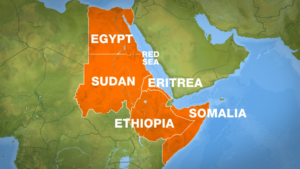
Prime Minister Winston Churchill appealed to the United States for additional assistance for Great Britain, during the early years of World War II (1). In return, President Roosevelt signed the Lend-Lease Act on March 11, 1941, distributing aid to, “governments of any country whose defense the President deems vital to the defense of the United States”(1). In the same year, Great Britain’s military was in an East African Campaign battle with the Italian Military in Abyssinia, modern day Ethiopia, Eritrea and Somalia. With the Lend-Lease Act signed, Great Britain was able to address its security concerns in World War II, leading to a victory in the East African Campaign. The sovereign leader of Abyssinia, King Haile Selassie, was in England at the time after removing himself in 1936. The Anglo-Ethiopian Agreement of 1944 restored full sovereignty back to Emperor Haile Selassie and reestablished Abyssinia as the independent statehood, Ethiopia. Great Britain continued administering Eritrea, after the East African Campaign victory in WW II, until 1952. After the dissolvement of the Italian Colonies in the region, the US Military began operating a telecommunications facility, Kagnew Station, in Asmara in 1943. The Kagnew Station, formerly Radio Marina during the Italian Colonial days, was used for communication purposes during World War II and the Cold War era. Ato Aklilou, Ethiopian Minister of Foreign Affairs, made a promise “that the United States would be allowed to maintain the U.S. Army communications station ‘Radio Marina’ at Asmara in the event Eritrea would be joined with Ethiopia” (3). In 1953, Emperor Haile Selassie sent Ato Aklilou Habtewold and General Mulughetta, Commander of the Imperial Ethiopian Body Guard, to Washington DC to “reach an agreement governing the important U.S. Army communications station and other military facilities in Eritrea” (3) and “discuss difficulties concerning the reimbursable military aid accorded by the U.S. to Ethiopia” (3). John Foster Dulles, Secretary of State at the time and one half of the Dulles brothers, mentioned in the Economist Article, assured Ato Aklilu that, “the necessary steps would be taken to facilitate the discussions” to finalize agreements before the Ethiopian delegates left Washington DC (3). Kagnew Station closed in April 1977, due to security concerns because of the Eritrean’s Armed Struggle for Independence against the Ethiopia’s Socialist government, at the time, led by Mengistu. With the deposing of Emperor Haile Selassie in Ethiopia in September 1974, the, “U.S. influence in the bilateral relationship with Ethiopia was ‘sharply diminished’…” (2). Eritrea was denied its independence after WWII because the people of Eritrea’s vote wasn’t recognized in the new international order. Instead, Great Britain created a British Military Administration (BMA) that was responsible for governing Eritrea until a UN vote in 1952 that made Eritrea a federation of Ethiopia, as an autonomous unit under the sovereignty of the Ethiopian crown. In Eritrea, there were political groups formed, opposing the UN vote that didn’t consider the self-determination of the people of the nation. One group, Eritrea Liberation Movement (ELM), was a nonviolent movement opposing the UN’s decision of the nation being a federation of Ethiopia. On September 1, 1961 a nonviolent struggle turned into an armed struggle for independence, when Idris Awate and a small group of comrades attacked Ethiopian forces in the Gash Barka region of Eritrea (4). In 1962, “Ethiopia dissolved the federation by an imperial declaration and Eritrea became the fourteenth province of Ethiopia” (5). Eritrea’s armed struggle for independence continued until Liberation day on May 24, 1991, hindered by a global order that failed to recognize its sovereignty for more than 50 years after Italy was removed from the country.
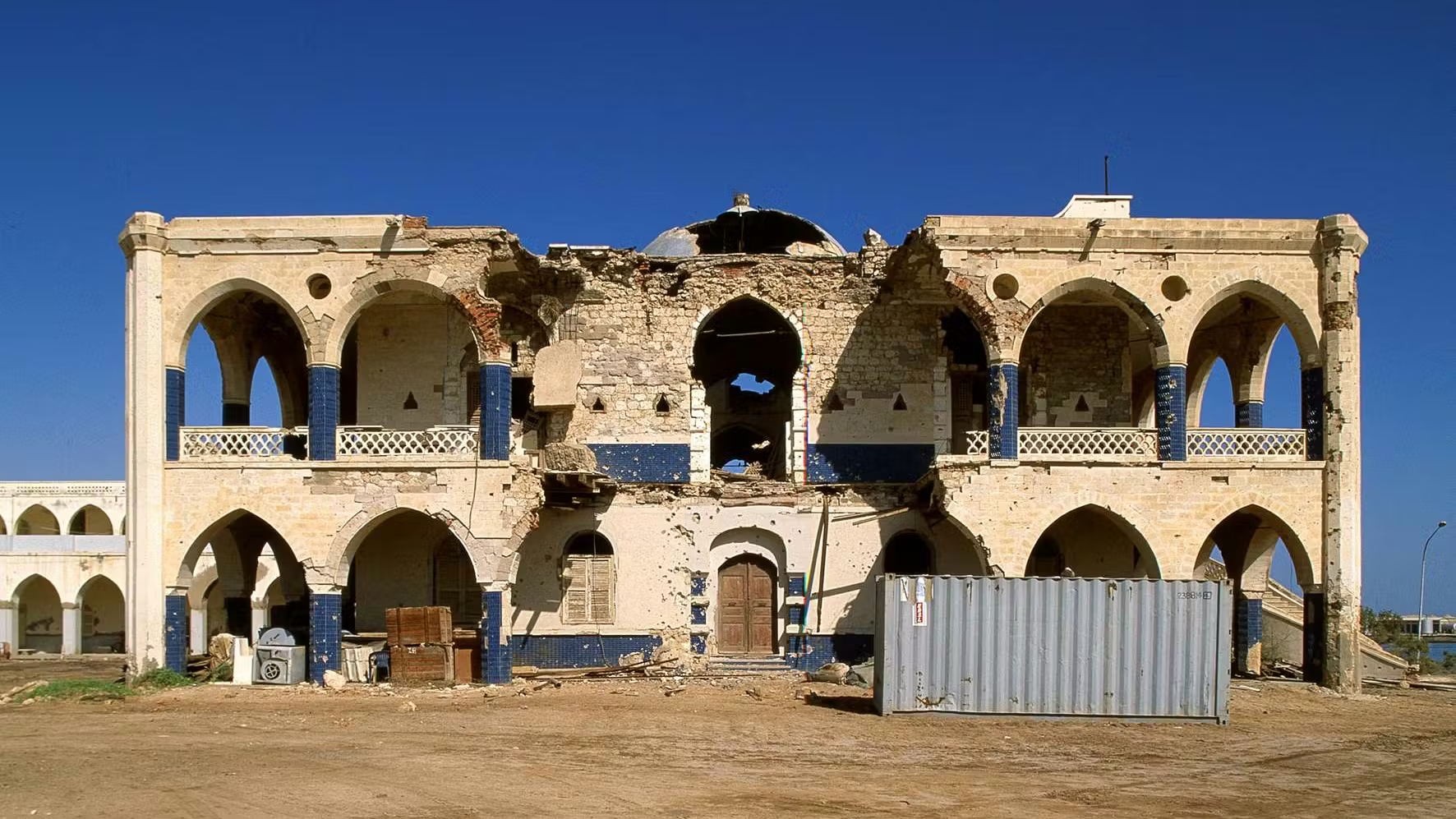
The response is only intended to provide historical context, to Eritrea’s story, that the Economist article failed to mention. The same story is told in the structure of the UNSECO buildings, mentioned in the Economist article. Before Great Britain’s East African Campaign, Eritrea’s capital, Asmara, was referred to as Little Rome or La Piccola Roma, in Italian. President Isaias Afwerki’s life tells Eritrea’s story during the same period. He is honored for his year of commitment to serving Eritrea, as a university student, military strategist or world leader. When international policies failed to recognize Eritrea’s right to self-determination, it was President Isaias Afwerki’s generation that reclaimed the nation’s right.
Work Cited
- House of Representative – Committee of Foreign Affairs. “The Lend-Lease Act of 1941”, History Art and Archives – United States House of Representatives, 10 January, 1941, https://history.house.gov/HouseRecord/Detail/25769811491?current_search_qs=%3Fsubject%3DPresidents%26PreviousSearch%3DPresidents%252cSubject%252c%252c%252cTitle%26CurrentPage%3D6%26SortOrder%3DTitle%26Command%3DMost%2BRecommended#:~:text=This%20arrangement%20required%20the%20purchasers,law%20on%20March%2011%2C%201941.
- Clements School of National Security. “Kagnew Station and Fluctuating Policy on Ethiopia”, Clements Papers Project, 2015, https://ns.clementspapers.org/briefing-books/kagnew-station-and-fluctuating-policy-ethiopia.
- Foreign Relations of the United States, 1952-1954, Africa and South Asia, Volume XI, Part I. “Memorandum of Conversation, by the Director, Office of African Affairs (Utter)”, United States of America Department of State – Office of the Historian, 24 March, 1953, https://history.state.gov/historicaldocuments/frus1952-54v11p1/d194.
- Woldemichael, Simon. “Eritrean Armed Struggle: 61st Anniversary”, State of Eritrea Ministry of Information, 30 August, 2022. https://shabait.com/2022/08/30/eritrean-armed-struggle-61stanniversary/#:~:text=This%20was%20the%20backdrop%20of,to%20the%20faith%20of%20Eritreans.
- Wiesner, Verena. “Eritrea”, Oxford Public International Law, July 2009, https://opil.ouplaw.com/display/10.1093/law:epil/9780199231690/law-9780199231690-e1281.