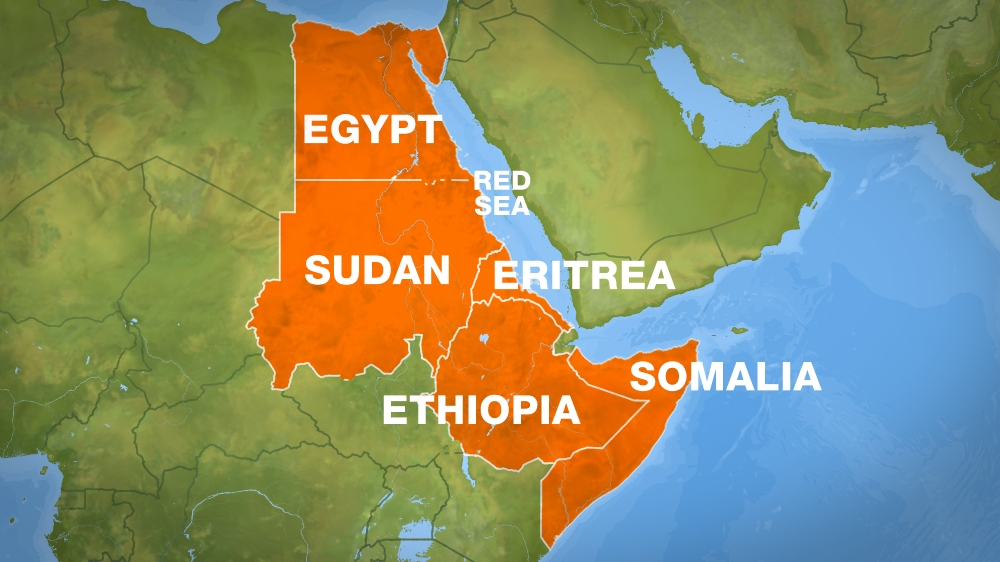
During a recent interview in September, Prime Minister Abiy Ahmed stated that the Red Sea belonged to Ethiopia 30 years and ago, and that it would be theirs again. Prime Minister Abiy goes on to imply that due to Ethiopia’s size and internal needs, full control of the sea must be retained. The underlying implications of these statements are particularly important as they falsify history and undermine Eritrea’s rights of ownership to its borders and ports.
According to Article 2 of the UN Charter, ‘All members shall refrain in their international relations from the threat or use of force against the territorial integrity or political independence of any state, or in any other manner inconsistent with the Purpose of the United Nations’. Ethiopia assuming direct control of the Red Sea across Eritrea’s borders would be a violation of Eritrea’s sovereignty. Additionally, Ethiopia is also not the only landlocked country, as there are 43 others that are in the same circumstances (World Population Review). If these countries were to use their population size as justification to override international law, the laws themselves would lose efficacy in providing a stabilizing force in the world. Therefore, this issue is not only important to the Horn of Africa but for all countries as every nation, especially those in the developing world, have their own challenges as well as obligations to their people and must all be held to the same standards.
On a broader note, this assertion implies that Eritrea actually belongs to Ethiopia and therefore the sea should already be in their possession. This in itself is blatant disregard for the 30- year struggle for independence that cost tens of thousands of Eritrean lives. It is important to note that history has the propensity to repeat itself if the world is not aware of the real facts. Eritrea was annexed by Ethiopia in 1962 [Wikipedia], and in a piece by Red Sea Beacon, it states that ‘by every standard of international law Eritrea should have been freed in the 1940s after Italy’s defeat, or at the very latest in 1952 when British administration ended’. It goes on to discuss how the delayed independence negatively affected the country for years to come. This delayed independence continues to contribute to the belief that Eritrea was simply a ‘state’ of Ethiopia rather than a separate country which can then be used to bolster this narrative that Eritrea’s rights should be adaptable to Ethiopia’s needs.
For Ethiopia to take control of Eritrea’s sea access, they would have to break international rules and this time against an independent nation, and with the Horn’s current climate no country would benefit from escalating hostilities. With the world’s mounting crises, and for the sake of the Eritrean and Ethiopian people, it would behoove the government of Ethiopia to come to peaceful agreements and terms to sea access that is mutually beneficial not only for their own sake, but also for the sake of generations to come.
Works Cited
Abiy says Ethiopia will reclaim Red Sea access, fueling regional tensions
Federation of Ethiopia and Eritrea – Wikipedia
United Nations Charter (full text) | United Nations
Eritrea’s Red Sea Sovereignty: An Irrevocable Reality | Red Sea Beacon