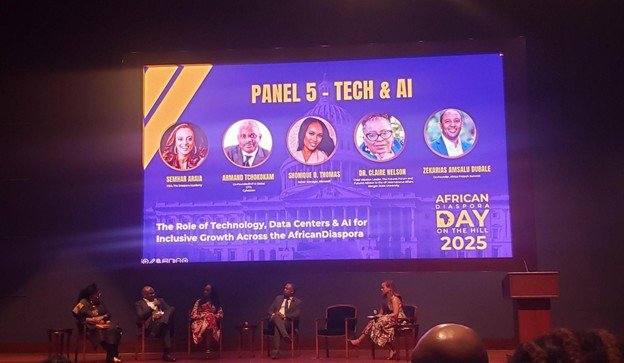
Policymakers, diplomats, and leaders from across the African continent and its diaspora gathered at the U.S. Capitol for the second annual Africa Diaspora Day on the Hill, a day-long forum aimed at strengthening ties between African communities and U.S. institutions. The event, held in the Congressional Auditorium, convened more than 150 participants for dialogue on investment, innovation, and the shared responsibility of advancing Africa’s future.
Organized by the Most Influential People of African Descent (MIPAD) in collaboration with congressional allies, the event underscored the growing presence and influence of African immigrants and their descendants in shaping U.S. policy, global trade, and development cooperation.
The forum opened with an announcement from Rep. Jennifer McClellan (D-VA) that House Resolution 720 had been introduced in Congress to designate September 2025 as National African Immigrant Heritage Month. The measure seeks to recognize the vast contributions of African immigrant communities to the economic, cultural, and civic life of the United States.
Throughout the day, panelists and lawmakers highlighted the need for Africans and their diaspora to reclaim ownership over the continent’s stories, resources, and future. Rep. Jonathan L. Jackson (D-IL), co-sponsor of the African Diaspora Investment Development Act, reminded attendees that Africa is poised to represent a quarter of the world’s population and a third of its workforce by 2050 (1). He urged greater U.S. engagement in education and youth investment, comparing it to the proactive role other global powers play on the continent.
Panel discussions led by thought leaders such as Ndidi Okonkwo Nwuneli, CEO of The ONE Campaign and Bertha Nibigira, founder of Nibigira & Youth Creative Solutions, warned of renewed patterns of exploitation in Africa’s resource sectors. “Africa’s minerals are in our phones and our cars—but too often, not in our minds,” said Nibigira, calling for fairer global trade and responsible investment.
A creative industries panel featuring Akunna Cook, Elis Clementino, Banky Wellington, and Rama Yade showcased Africa’s growing cultural influence through film, music, and design. Nigeria’s Nollywood was highlighted as a model for economic growth and self-representation, demonstrating how art can serve as both cultural diplomacy and sustainable enterprise.
Across all sessions, the forum echoed a unifying message articulated by Melvin Foote, founder of the Constituency for Africa, who received a Lifetime Achievement Award for his leadership in advancing Africa U.S. partnerships: “The diaspora must see itself as an extension of the continent’s development and voice in the world.”
Organizers noted that remittances to the African continent reached $100B in 2023, reflecting the diaspora’s immense economic role (2). Speakers called for these flows to be complemented by structured investment and collaborative policy action.
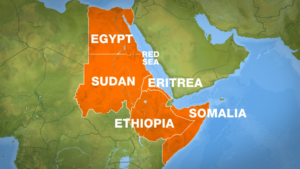
For the Eritrean diaspora, the event provided valuable lessons on engagement, networking, and leveraging collective influence. It underscored the importance of unity among African communities and the role of education, innovation, and entrepreneurship in transforming Africa’s global position.
Africa Diaspora Day on the Hill 2025 concluded with a renewed commitment to partnership, purpose, and the shared pursuit of a prosperous African future, both at home and across the diaspora.
Work Cited
- Stanely, Andrew. “African Century”, International Monetary Fund Finance and Development Magazine, September 2023, https://www.imf.org/en/Publications/fandd/issues/2023/09/PT-african-century.
- “Remittances from African diaspora grew in 2023, set to exceed $100bn in 2024”, Global Forums on Remittances, Investment and Development, 31 January, 2025, https://gfrid.org/remittances-from-african-diaspora-grew-in-2023-set-to-exceed-100bn-in-2024/.